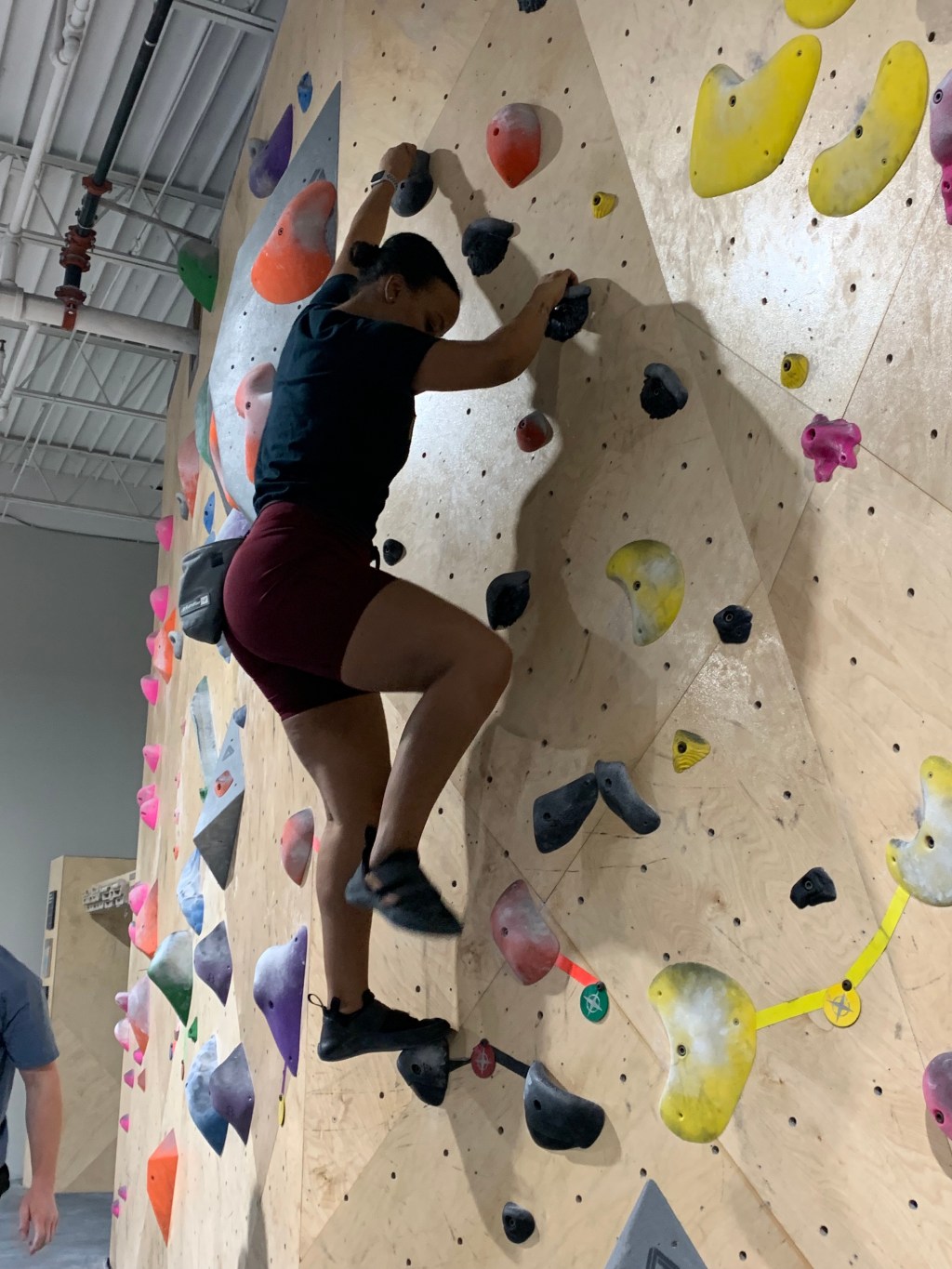
Anyone who knows me, knows that I have a strong dislike for upper body exercises. This poses an issue for someone who is training for a Spartan Race, right? For that very reason I’ve been trying to find alternative workouts to work into my training regimen.
Rock climbing seemed like the perfect fit to switch up my workouts so I decided to go to a local climbing gym to give it a try. One of my coworkers volunteered to join me, so we set out on our adventure. I had tried rock climbing once before while I was in school for my masters, but unfortunately I was not able to continue after everything got shut down due to the pandemic. Although I had some prior experience, this go round was a bit different that what I was used to.
The major difference was auto-belay vs. having a human belayer. A belay is a safety mechanism used to secure the climber. It utilizes ropes, clips and a harness to create friction. In the event that the climber falls, any slack in the line is brought to a stop by the friction. This stops the fall, or slows it down to a point where the climber can safely reach the ground.
For the auto belay system, we did have to go through a brief training session and sign a waiver. It was a pretty simple process. The auto belay system is attached to the climbing wall. All you have to do is connect the system to your harness using a clip, and you’re all set.
Human belaying, requires a couple of commands that need to be spoken out-loud to ensure everyone is ready for the climber to begin their accent. Each party wears a harness. I’ll leave out the complicated details because I have absolutely no experience in belay, but I will note that training and certification are required in order to become a belayer.
Things To Know Before Rock Climbing:
Bouldering vs. Rock Climbing: The main difference between the two is the height of climb.
- Bouldering: doesn’t require a rope and harness. Typically, you’ll be climbing around 12 to 15 feet at max.
- Rock Climbing: Unless you’re free soloing, you will need a harness and rope (belay). More than likely, you’ll be climbing at least 30 feet or higher.

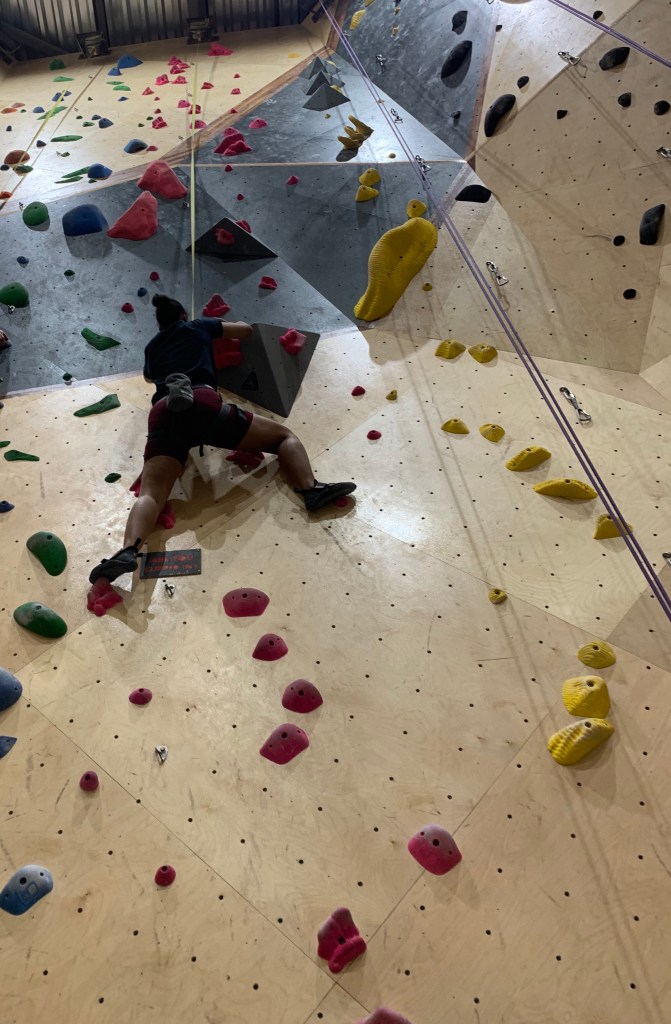
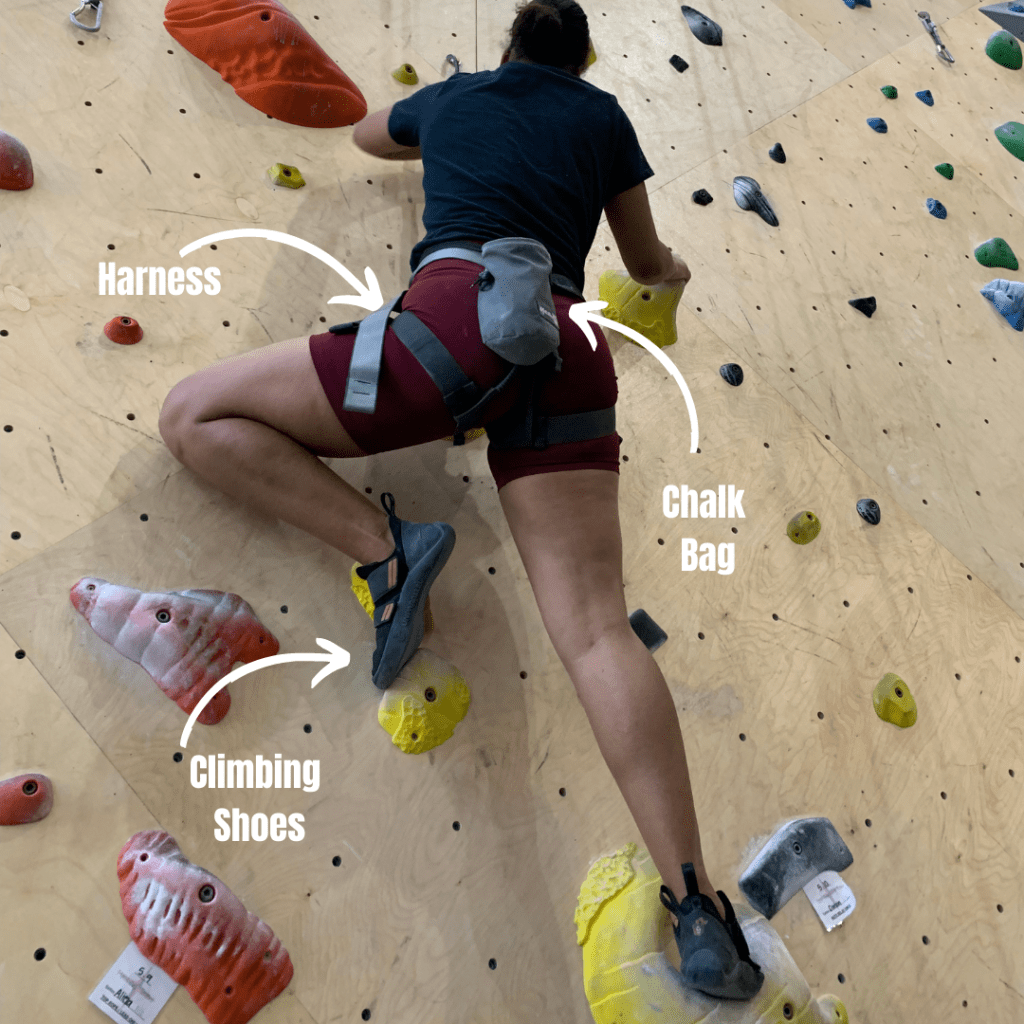
Necessary Equipment: Most of the equipment you’ll need can be rented through the facility. They include:
- Proper footwear: Specialized footwear helps grip the holds. Climbing shoes also assist with weight distribution while climbing.
- Harness: The harness is what keeps you secure in conjunction with the belay system.
- Chalk Bag: Chalk is used to dry sweat on your hands and provide a better grip while climbing. The chalk bag is worn around your waist.
Climbing Grades: Climbing Grades are the rating system used to identify the difficulty of a hike. There are many different systems used, and your facility may choose one, or a combination of systems. I’ll briefly outline the two systems used at my gym.
- Circuit Grading System: This system is more subjective, because it recognizes that there are several factors that could influence the difficulty of a climb, including the climber’s own body composition. It uses a color scale, where each color spans multiple grades.
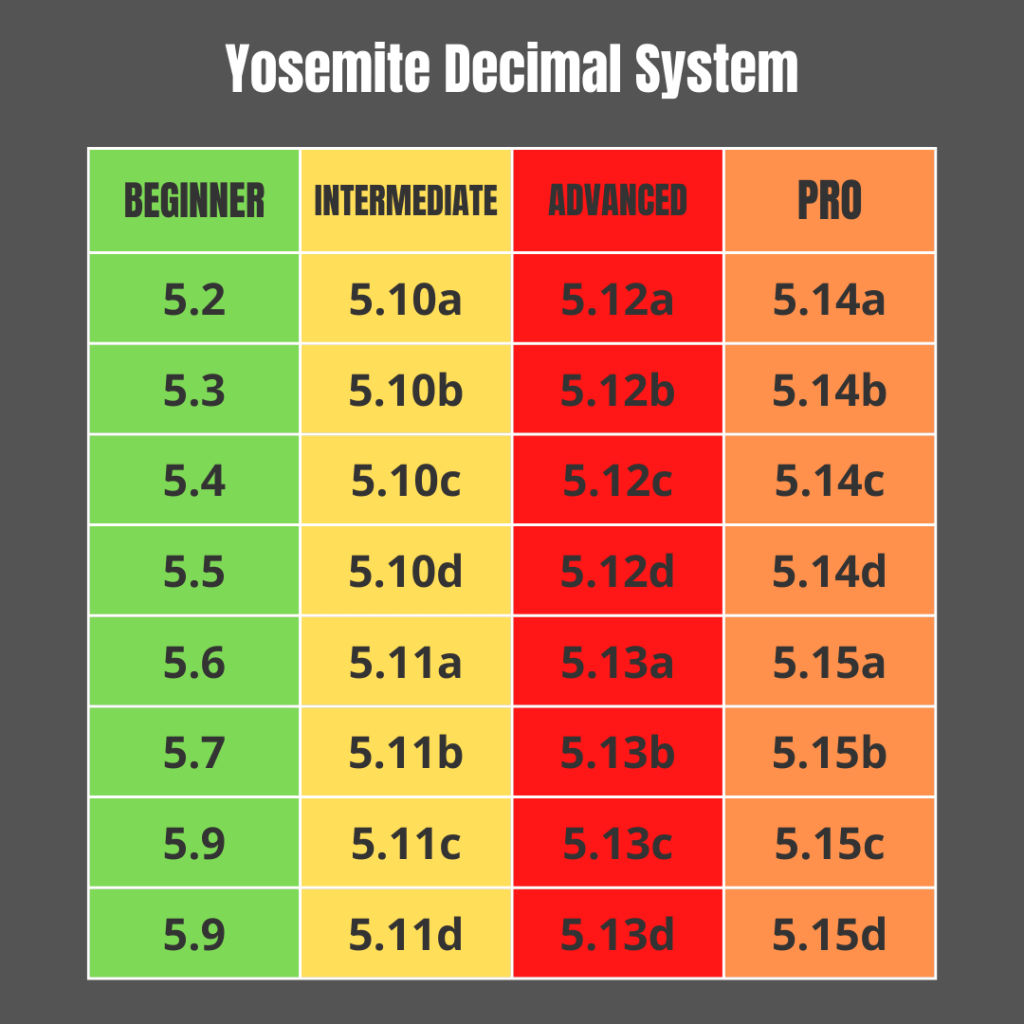
- Yosemite Decimal System: The YDS is split up into different classes. For all indoor climbs, the number will begin with a 5. The difficulty of the climb will follow the decimal point, and will fall anywhere in-between 2 and 15. After 5.10, the letters a, b, c, and d are added in to notate even more increased difficulty.

Risk of Injury: As with any physical activity, there is a risk of injury. You should expect to incur scrapes/bruises and sore muscles at the very minimum. While facilities can’t guarantee 100% risk free climbing, there are some steps that you can take as a climber to be more safe.
- Follow the rules of the facility.
- If using an auto-belay system, make sure to clip yourself in before each climb. If using a trained belayer, follow all prompts before beginning your ascent.
- Don’t attempt to climb over the bouldering walls.
- Don’t position yourself below a climber.
If you are a beginning climber, don’t be afraid to give it a try!! Consider all elements, and if you’re up for it grab a friend and head to your nearest climbing facility to try out a new adventure.
 Yellow Backpack Adventures
Leave a comment